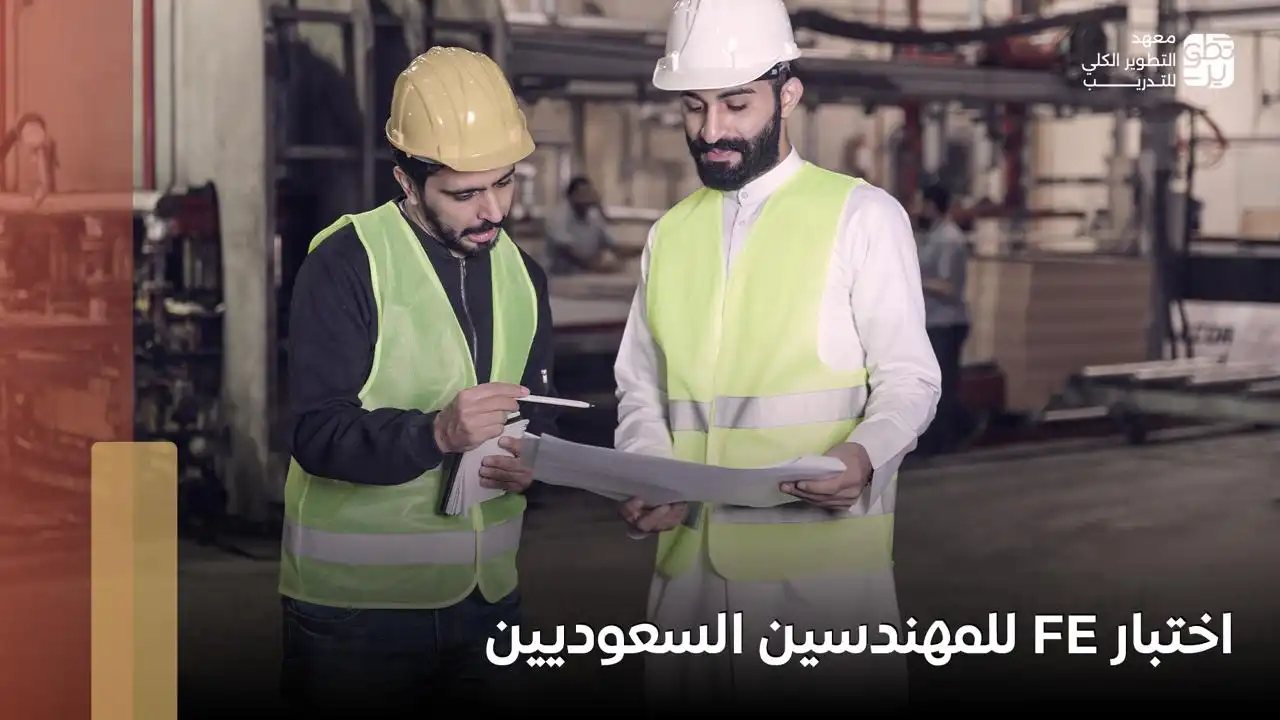
The Saudi Council of Engineers has announced a new professional classification system for 2026, making the FE exam for Saudi engineers a mandatory requirement and the first step toward achieving the “Professional Engineer” or consultant status. This means that the FE exam has become the only pathway for non-Saudi engineers to prove competence and renew licenses, as well as the starting point for those aiming to open an engineering office in the future.
At MDIT, we prepare you to succeed in the FE exam for Saudi engineers by offering specialized training programs to help you obtain the accredited certification. With us, you can confidently pass the professional engineering exam, advance your career path, and increase your opportunities in the engineering job market.
FE Exam for Saudi Engineers
The FE exam for Saudi engineers is an internationally recognized assessment that measures your understanding of engineering fundamentals. It is also a key requirement in the professional classification system under the Saudi Council of Engineers FE framework.
FE stands for Fundamentals of Engineering. Simply put, it evaluates your knowledge of core engineering subjects such as:
- Mathematics
- Physics
- Fluid Mechanics
The exam is typically conducted in English, and its goal is to ensure that engineers have a strong scientific foundation before moving on to higher-level exams or professional stages. Join us at MDIT and get both training and exam preparation together. We ensure full readiness for the FE engineering exam, saving you time and effort while placing you on the first step toward success in the internationally recognized professional engineering pathway.
Requirements for the FE Exam for Saudi Engineers
Based on the standards of the Saudi Council of Engineers FE exam, the test is organized in cooperation with the NCEES under strict guidelines to ensure high-quality professional qualification.
Key requirements for registering in the FE exam for Saudi engineers:
- Academic Qualification: Applicants must be in their final year of an accredited engineering program (such as ABET-accredited programs or equivalent), or already hold a bachelor’s degree in engineering. This ensures candidates possess the foundational skills covered in the FE exam across disciplines.
- Registration with the Council: Applicants must first submit a request through the official Saudi Council of Engineers website. Administrative fees are required to obtain pre-approval before booking the exam through NCEES.
- Exam Fees: After approval, a fee of $225 must be paid directly to NCEES as part of the booking process, ensuring serious applicants.
- Attempt Policy: Candidates are allowed one attempt per testing window, with a maximum of three attempts within a 12-month period.
It is highly recommended—especially for practicing engineers preparing for mechanical or electrical FE exams—to directly contact the council for updates and to ensure alignment between specialization and the required exam. Obtaining this certification is just as important as preparing later for the PE exam to reach consultant-level status.
FE Exam Structure and Question Distribution
Before entering the exam, every engineer should have a clear understanding of the FE exam format and how questions are distributed. This exam depends as much on time management as it does on engineering knowledge.
The FE exam for Saudi engineers is divided into two main sections. The total time is available from the start, without separate time limits for each section. This gives flexibility but requires careful time management.
How to Handle Questions
After completing approximately half of the questions, the system will prompt you to review and submit them. Once submitted, you cannot return to this section. Afterward, you may take a scheduled break before continuing with the second half of the exam.
At MDIT, we strongly recommend practicing on mock exams that simulate this system to avoid losing time.
Question Types in the FE Exam
The FE exam is not limited to traditional multiple-choice questions. It includes modern interactive formats known as Alternative Item Types, such as:
- Multiple correct answers
- Point-and-click questions on diagrams
- Drag-and-drop classification
- Fill-in-the-blank numerical responses
For the most accurate details, the official NCEES website provides a dedicated page with specifications for each discipline, including FE exam formats and details.
We also strongly recommend reviewing the comprehensive exam handbook (updated November 2025), which explains all policies and procedures you need before taking the exam.
Difference Between FE and PE Certification
When discussing the FE exam for Saudi engineers, we are talking about the foundation of an engineer’s career. While the FE focuses on general principles, the PE focuses on professional practice and deep expertise.
1. FE Exam (Fundamentals of Engineering)
- Purpose: Earn the title Engineer in Training (EIT)
- Focus: Broad academic knowledge studied at university
- Format: Computer-based exam with 110 questions
- Duration: 6 HOURS
- Specializations: Mechanical, Civil, Electrical, and more
2. PE Exam (Principles and Practice of Engineering)
- Purpose: Obtain the Professional Engineer license
- Eligibility: Usually after 4 years of work experience
- Focus: Practical applications and real-world engineering solutions
The key insight we emphasize at MDIT is understanding the nature of each exam. Success in the FE exam requires quick recall of academic concepts, while the PE exam requires thinking like an expert solving real-world problems.
Remember, the Saudi Council of Engineers FE exam is the mandatory gateway to the PE level. Due to the competitive nature of these exams, they are sometimes referred to as engineering aptitude tests because they truly measure your readiness for the job market.
Why Choose MDIT for Your FE Journey?
With our deep understanding of the Saudi Council of Engineers FE requirements, we recognize the responsibility and provide a comprehensive learning environment to prepare you both mentally and academically.
We offer full flexibility—whether you prefer in-person training or online learning from anywhere.
What We Offer:
- Integrated Experience (Training + Exam): Prepare and take the FE exam in one place without the hassle of external centers
- Expert Support: Specialized trainers for mechanical, electrical, and civil FE exams
- Administrative Guidance: Assistance with registration and understanding all requirements
- Realistic Practice: Training based on simulations that mirror the actual exam
Join hundreds of engineers who trusted us, passed the FE exam for Saudi engineers, and obtained the Fundamentals of Engineering certification through our comprehensive training programs.
Frequently Asked Questions
What are the benefits of passing the FE exam in Saudi Arabia?
Passing the FE exam for Saudi engineers is a key requirement to advance to the “Associate Engineer” classification under the Saudi Council of Engineers. It is also an essential step before applying for the higher-level PE exam.
Is the FE exam required for the PE exam?
Yes, in most cases, passing the FE exam is required before applying for the Principles and Practice of Engineering (PE) exam, with some exceptions.