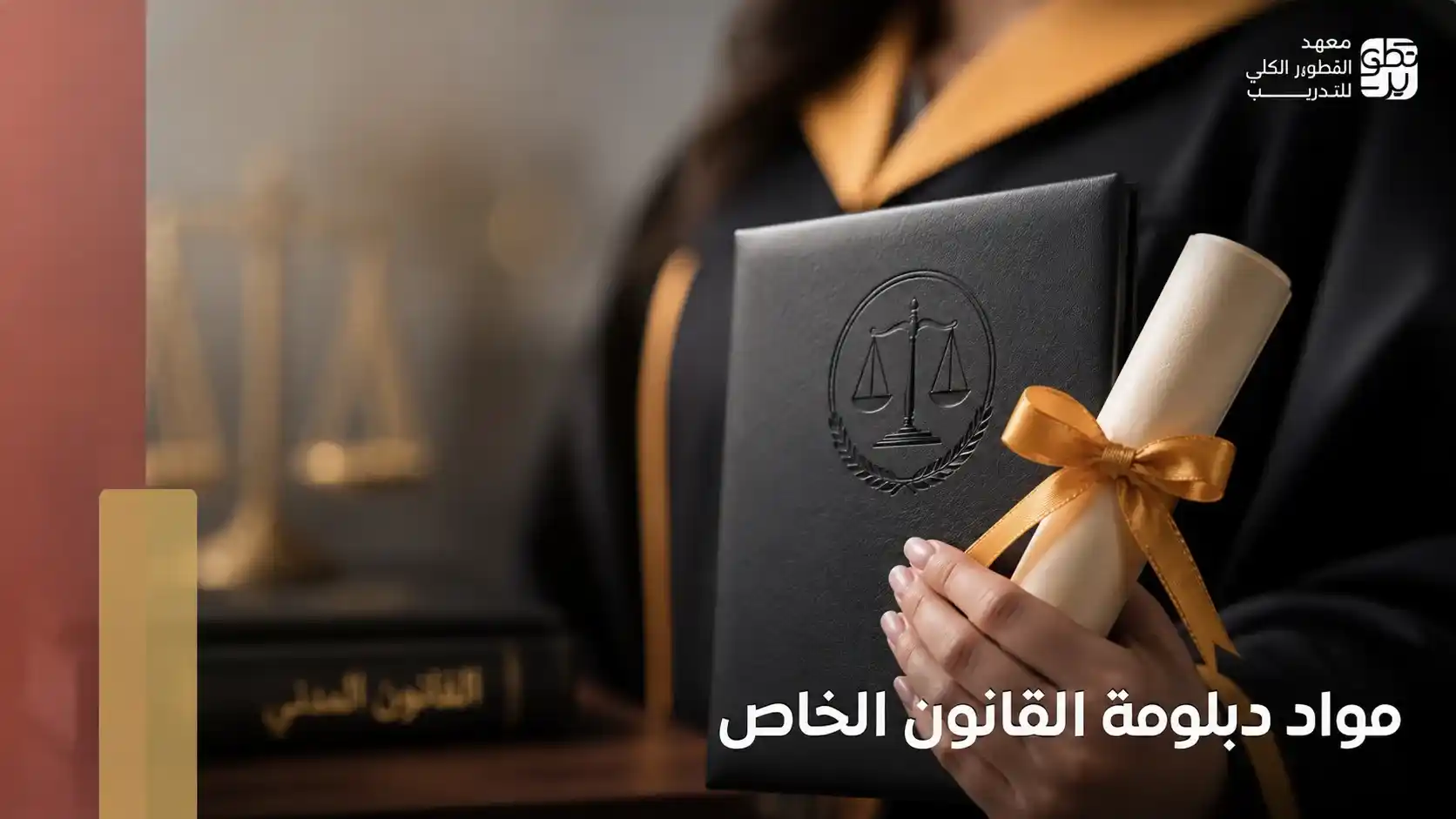
In a world where contracts, transactions, and legal disputes are increasing day by day, understanding the laws that govern relationships between individuals and businesses has become a real necessity. This is why many people turn to explore the subjects of a Private Law diploma to understand what students study in this path and how this diploma can help prepare them for promising career opportunities in law, legal affairs, or even specialization in fields such as a Criminal Law diploma.
In this article, we will take you on a clear and simplified journey through the concept of a Private Law diploma, the key subjects it includes, the associated higher diploma for lawyers, job opportunities after graduation, the differences between public and private law, and how to choose the diploma best suited for your career. Keep reading.
What is a Private Law Diploma?
A Private Law diploma is an important step for anyone wishing to understand the systems that regulate relationships between individuals and institutions. The study of Private Law diploma subjects is connected to daily issues such as contracts, civil transactions, and commercial disputes. This type of diploma focuses on training students to apply legal rules in real-world work situations, helping them build a strong foundation to later specialize in broader fields such as law or legal consultancy.
Key Subjects in the Private Law Diploma
The subjects of a Private Law diploma cover a wide range of courses that help students understand the legal system in a comprehensive manner. These courses focus on developing skills in case analysis, contract drafting, understanding commercial and labor systems, making the diploma suitable for anyone looking to work in environments that require strong legal awareness both in Saudi Arabia and abroad.
Before reviewing the subjects, it's important to note that the Private Law diploma subjects are not limited to theoretical study. They also help students understand the systems that govern the labor market, contracts, and legal disputes. The following table outlines the main subjects that have appeared repeatedly in official academic plans:
|
Legal Subject |
What Does the Student Learn? |
|
Civil Law and Contracts |
The student studies how to organize contracts and obligations between individuals and companies. |
|
Commercial Law and Corporate System |
The student learns the rules for establishing companies and managing commercial activities legally. |
|
Saudi Labor System |
The student understands workers' and employers' rights and how labor disputes are resolved. |
|
Arbitration and Dispute Resolution |
The student is trained on resolving commercial disputes outside of traditional courts. |
|
Legal Drafting Techniques |
The student develops skills in writing contracts and legal memorandums professionally. |
|
Judicial Execution |
The student learns the mechanisms for executing rulings and judicial decisions officially. |
|
Evidence and Procedures |
The student learns how to build legal arguments and use evidence in court. |
These subjects in the Private Law diploma provide students with practical legal insights that help them work with greater confidence in legal and commercial fields.
Notable Subjects in the Private Law Diploma
The subjects in the Private Law diploma gradually enhance the student's skills, as they combine civil, commercial, and procedural systems. Some of the key subjects that help students build real legal experience include:
- Studying sources of obligations and their rules within civil law.
- Learning how to draft commercial contracts systematically.
- Understanding the corporate system and managing banking transactions.
- Applying the labor system to cases involving employees.
- Training in arbitration as a legal solution for disputes.
- Learning about judicial execution procedures for rulings.
These courses demonstrate how the diploma builds a solid foundation for those wanting to specialize in law or legal practice later on.
Subjects in a Criminal Law Diploma and What the Student Learns
The Criminal Law diploma is closely related to some subjects in the Private Law diploma, as students need to understand both criminal and civil systems. This path focuses on studying crimes, punishments, and the procedures governing investigation and trial, helping students gain a solid understanding of criminal cases within the Saudi legal environment.
The Private Law diploma includes core criminal subjects that help students understand criminal aspects, especially for those interested in the Criminal Law diploma. Some of these subjects include:
- Studying punitive crimes systems to understand the types of crimes and penalties.
- Learning about criminal procedures that govern investigation and trial.
- Understanding evidence and how it is used in criminal cases.
- Practicing in front of the general court to apply knowledge practically.
These subjects give students a strong foundation to work in legal fields related to criminal law.
Higher Diploma for Lawyers Linked to Private Law
The Higher Diploma for Lawyers provides an advanced practical model within the subjects of the Private Law diploma, as it helps students acquire lawyer skills within courts and official bodies. This diploma focuses on pleadings, legal drafting, and practical training in front of the general and administrative courts, enhancing the graduate's readiness to practice law competently.
The academic plan for the Higher Diploma for Lawyers includes strong subjects directly linked to the Private Law diploma, such as:
- Studying the Shari'a pleading system to understand the litigation process.
- Learning legal drafting techniques to prepare memorandums and lawsuits.
- Understanding the corporate system and commercial contracts related to business.
- Applying the labor system to employment-related cases.
- Training in arbitration as an important career path for lawyers.
- Participating in training in front of general and administrative courts.
These subjects are some of the most important courses that truly prepare the student for the legal job market.
The Difference Between Public Law and Private Law Diplomas
Many students ask about the difference between a Public Law diploma and a Private Law diploma, especially when comparing the subjects of a Private Law diploma with other legal programs. In fact, understanding this difference helps you determine the path that suits you best, whether you prefer working in governmental systems or specializing in civil and commercial cases or even Criminal Law.
Before choosing the right diploma, it is helpful to observe how the subjects of a Private Law diploma differ from Public Law diploma subjects in terms of the nature of the cases and the entities involved. The following table explains the difference simply:
|
Comparison |
Private Law Diploma |
Public Law Diploma |
|
Nature of Legal Relationships |
Governs relationships between individuals and companies such as contracts and transactions. |
Governs the relationship between the state and individuals, such as administrative and constitutional systems. |
|
Key Study Areas |
Contracts, companies, labor, judicial execution, arbitration. |
Administrative law, public international law, government systems. |
|
Related Careers |
Linked to fields such as Criminal Law, law practice, and commercial judiciary. |
Linked to government jobs, regulatory bodies, and public oversight. |
|
Job Opportunities |
Legal assistant, contract advisor, lawyer, commercial law expert. |
Government legal researcher, roles in regulatory and administrative bodies. |
This comparison helps you understand the nature of the Private Law diploma subjects and choose the path that aligns with your career ambitions.
How to Choose the Right Legal Diploma for You?
Choosing the right diploma helps you make the most out of the Private Law diploma subjects or other legal paths. Therefore, you need to clearly define your goal before enrolling, as some programs focus on law practice and contracts, while others lean toward administrative or criminal aspects, such as the Criminal Law diploma.
To choose the right legal diploma based on the Private Law subjects, follow these steps:
- Define the area you want to work in, such as contracts, companies, or Criminal Law.
- Review the curriculum and ensure the subjects serve your professional goal.
- Choose a diploma that provides practical experience such as training and legal drafting.
- Compare between the academic diploma and professional diploma based on your needs.
- Ask about job opportunities after the program and how well it aligns with the Saudi job market.
When you choose wisely, you will benefit from the Private Law diploma subjects in the best possible way.
In conclusion, the subjects in the Private Law diploma are among the most important paths that help students understand the systems governing civil and commercial relationships within society. They also open the door to expanding into related specializations like the Criminal Law diploma, law practice, or legal work in businesses and institutions. With a variety of subjects covering contracts, corporate systems, legal drafting, and arbitration, students become more capable of building a strong professional future in the legal field within Saudi Arabia. Therefore, choosing the right diploma and benefiting from its practical content is a fundamental step for anyone aiming to excel in this specialization.
If you want to develop your legal knowledge and understand the systems needed in the Saudi labor market, following the training programs offered by the Macro Development Institute for Training will help you build a strong professional foundation in management and professional skills, in line with employment and continuous development requirements within the Kingdom. Don't hesitate and contact us now.
Frequently Asked Questions
Can you specialize in a Criminal Law diploma after the Private Law diploma?
Certainly, because some subjects in the Private Law diploma include important criminal topics such as criminal procedures and evidence, which makes transitioning to a Criminal Law diploma easier.
Is the Private Law Diploma suitable for beginners?
Yes, because the subjects of the Private Law diploma start with foundational courses that help students understand law step by step, and then move on to more advanced subjects like drafting and arbitration.