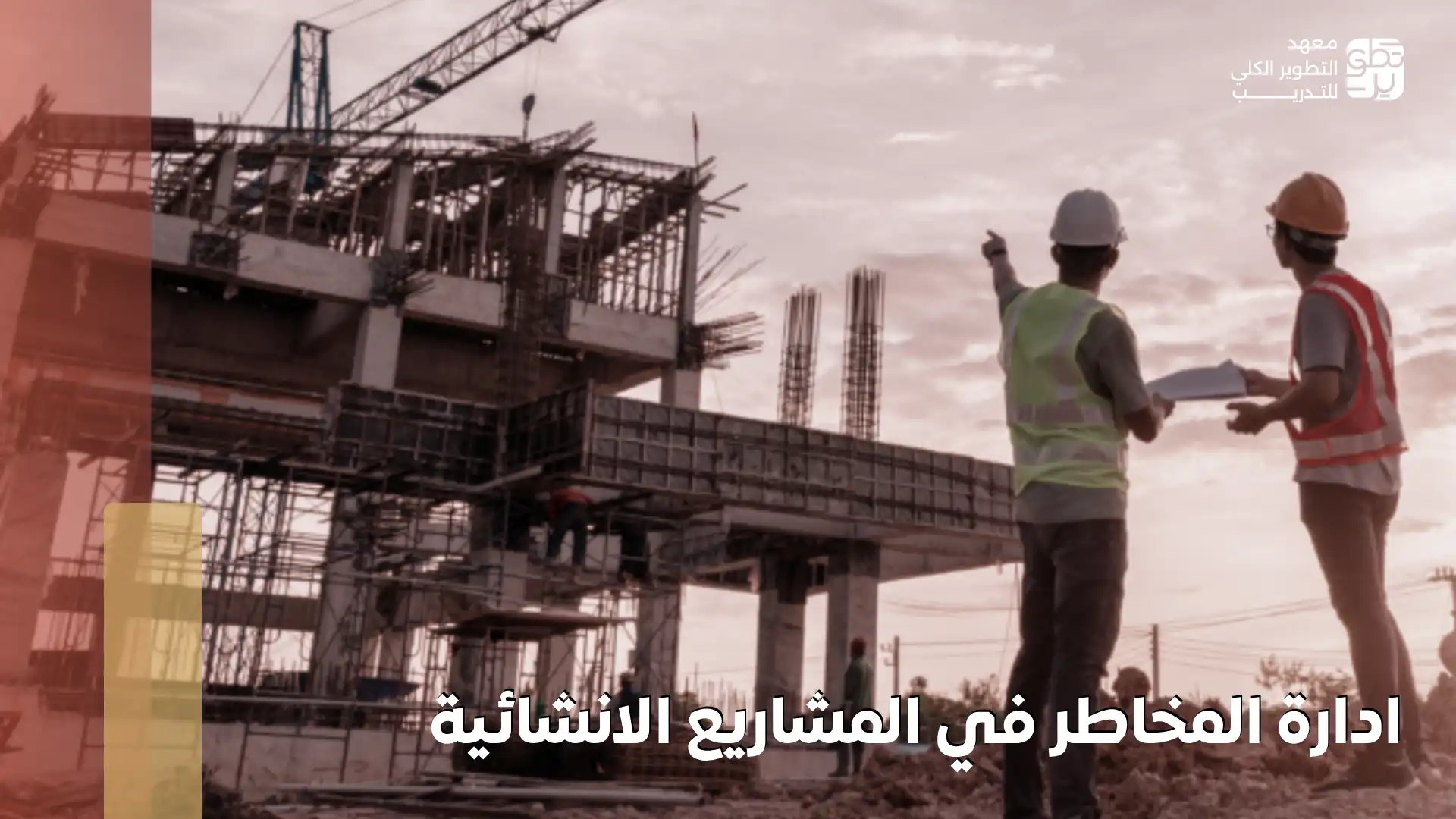
Who Hasn’t Heard of a Massive Project That Cost Billions and Then Suddenly Faced Years of Delay or Partial Collapse? The examples are countless, and they all show us how the construction sector is full of risks. You’re dealing with huge equipment, work teams at dangerous heights, and extremely complex logistics. Simply put, few fields carry the same level of risk as a construction project.
The secret is not making the risk disappear, but rather how to manage and deal with it effectively. Imagine you’re running a major construction project in Saudi Arabia: cement prices suddenly jump 30%, unexpected changes in government regulations, or a safety incident on site. These challenges are unpredictable and constantly changing.
In the Saudi market, the skill of risk management in construction projects has become a primary requirement for every major contracting company. Mastering risk management through accredited professional courses and certifications dramatically increases your market value and turns you into “the indispensable employee.”
What Is Risk Management in Construction Projects?
Risk management in construction projects is simply “thinking about the future to protect the present.” It is a systematic, organized process carried out by the project team to ensure the project is completed successfully, within the approved budget and on schedule.
This process is not reactive (waiting for a problem to happen and then responding), but proactive and starts in the early planning stages. In brief, it includes:
- Identifying all potential problems (e.g., material delays, price increases, bad weather).
- Assessing the severity of each risk (how likely is it? What is its financial and schedule impact?).
- Developing a clear response plan for each risk (how do we avoid it, or how do we minimize its impact if it occurs?).
The goal of risk management in construction projects is to reduce negative impacts and increase project efficiency and quality. That’s why understanding risk management and applying specialized risk management programs helps control these challenges throughout the entire project lifecycle.
If your future lies in construction and engineering risk management, contact us now or message us to inquire about the dates of the latest accredited courses and certifications.
Why Is Risk Management in Construction Projects Essential?
Risk management is not just a formal procedure—it is the backbone of project success. Its importance can be summarized as follows:
- Cost control: It allows early anticipation of potential cost increases, preventing budget overruns and protecting profit margins.
- Schedule adherence: By preparing response plans for possible delays, you ensure the project is delivered on time and contractual obligations are met.
- Site safety: Safety plans and risk reduction create a safer work environment and protect the workforce.
- Better decision-making: Provides the project manager with clear data on potential challenges, leading to stronger decisions.
- Early problem detection: Prevents small issues from escalating into major obstacles that drain time and money.
- Building stakeholder confidence: When clients and stakeholders see proactive and professional management, their trust grows, opening doors to new investments and collaborations.
Invest in an accredited certification that secures your future from MDIT and obtain a professional certificate in risk management. Contact us to learn the steps required to earn the certification the market demands and start your professional journey.
Types of Risks in Construction Project Management
To build a solid risk management plan, you must understand the main types of risks on construction sites:
- Financial Risks: Sudden price fluctuations in key materials (steel, cement) after contract signing, or delayed payments from the client, disrupting cash flow and halting salaries and subcontractor payments.
- Schedule & Delay Risks: Weather issues (heavy rain, storms) that stop work, or late delivery of critical materials and equipment.
- Technical & Quality Risks: Engineering errors in drawings requiring costly changes during execution, or unexpected site conditions (soil issues, underground obstacles) that require foundation redesign.
- Safety & Workforce Risks: Accidents, injuries due to non-compliance with safety standards, or health hazards from exposure to harmful materials.
- Legal & Contractual Risks: Contract disputes with the client or subcontractors over change orders, difficulty obtaining permits, or sudden changes in local building regulations.
These are the main categories that must be considered when applying risk management in construction projects.
Risk Management Plan for Construction & Engineering Projects
The risk management process in construction is very logical and resembles how you plan anything important in life. It consists of 5 key steps:
- Risk Identification: List every possible negative scenario—from delayed steel shipment to an on-site accident. Review past projects, consult engineers and site workers, and study similar projects.
- Risk Assessment: Not all risks are equal. Classify them by probability (high, medium, low) and impact on cost and schedule (major, moderate, minor).
- Response Planning: Prepare a response plan for the most critical risks. There are four main strategies:
-
- Avoid: Change design or method to eliminate the risk completely.
- Mitigate: Reduce likelihood or impact (e.g., increase quality inspections).
- Transfer: Shift responsibility to a third party (e.g., purchase insurance).
- Accept: Accept the risk and allocate a contingency budget.
4. Implementation & Monitoring: Monitoring continues throughout the project. Assign a “Risk Owner” for each major risk to ensure response plans are executed properly.
5. Review & Lessons Learned: At project closeout, review what happened, what was missed, what worked well, and what needs improvement for future projects.
In the end, the truly professional engineer is not the one who knows how to solve a problem after it occurs, but the one who anticipates the risk, prepares a strong response plan, and masters crisis management in companies. Risk management in construction projects is the new language that enables you to see risks clearly and provides systematic tools to address them before they escalate.
Don’t waste time searching for resources to study construction risk management—MDIT offers the latest specialized courses and accredited professional certifications that guarantee your excellence in the job market.
Turn anxiety into leadership. Register now, contact MDITtoday, and begin your journey toward a stronger, more distinguished professional future. We will transform you into an expert who protects construction projects from any loss.
Frequently Asked Questions about Risk Management in Construction Projects
Can risks be completely avoided in a construction project?
Of course not. You can never eliminate risk 100%; every new project carries some level of uncertainty. Your job as a risk manager is to manage it—identify, assess, mitigate, avoid, or transfer it as explained earlier.
What are the most important types of risks to focus on in any construction project?
Risks are generally divided into four main categories: financial risks (sudden material price changes), schedule risks, technical/quality risks, and safety risks (accidents and injuries on site).